
Turkey
basic introduction to the whirling dervishes
We need to embarrassingly confess two things:
Firstly, we had no idea what whirling dervishes were before going to Turkey.
Secondly, when we were asked if we were interested to attend one while we were in Pamukkale, Turkey. We said yes thinking that it would be an evening of entertainment because the word “whirling” conjures up images of dancing and spinning around. So we were right about the spinning but not right about anything else.

This is what we learnt during the course of the evening:
- It is known as a Sema ceremony
- It is part of Turkish custom, history, beliefs and culture
- It is a religious ceremony symbolising the journey of man through mind and love to perfection
- There are 7 parts of the ceremony:
- A eulogy to Muhammad, the Prophet, and to all the Prophets before him – to praise them is to praise God
- Drums symbolising the Divine order of the Creator
- Instrumental music with a “ney” – a reed wind instrument. This represents The Divine Breath – the first breath that gave everything life
- The dervishes greet one another and perform their circular walk three times
- The dervishes whirl in a circular formation and repeat this “salute” four times. They whirl with their arms open with their right hands directed towards the sky, ready to receive God’s beneficence. They turn their left hands towards the earth and spin from right to left. This is the Sema part
- A reading from the Quran
- A prayer for peace of the souls of all Prophet and believers.
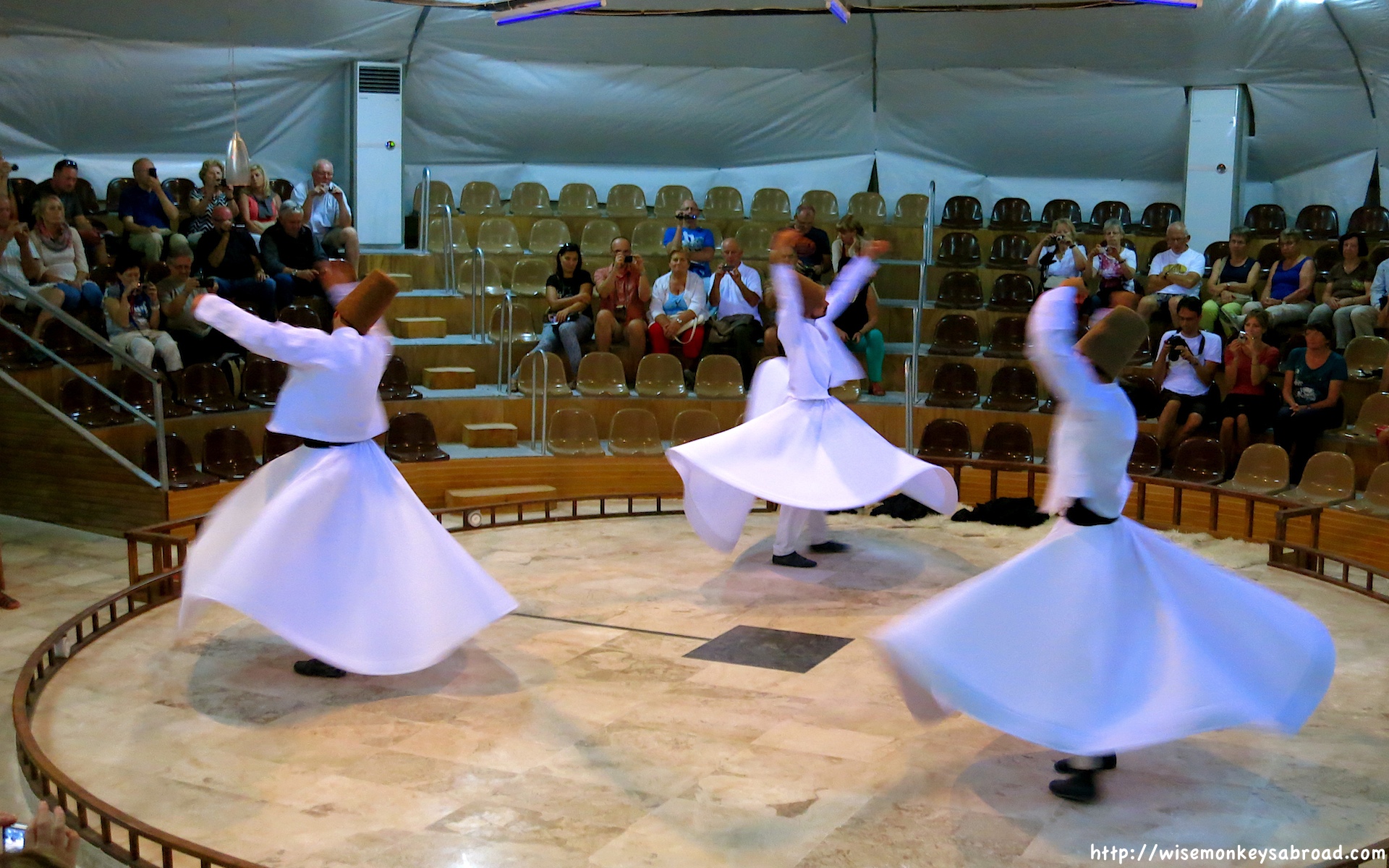
Being a religious ceremony, it is respectful not to take photographs during the cermony. The photos we took were after the ceremony when the dervishes performed specifically for photos.
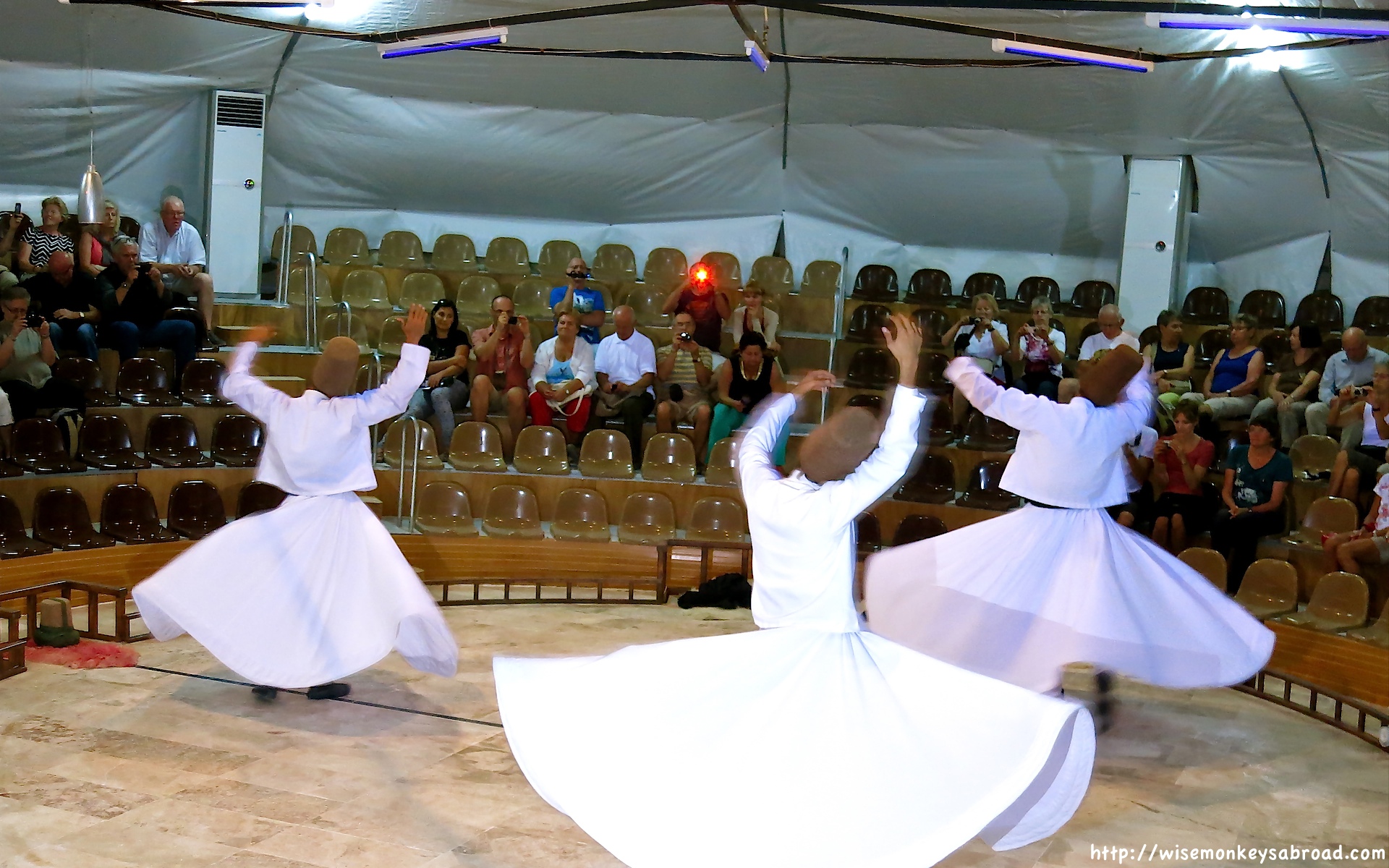
Attending a whirling dervish ceremony is not for everyone. We do recommend that it is worth understanding the purpose before experiencing the holy ceremony. It will help with a greater appreciation for what is being performed. Be aware that the ceremony takes approximately 60 minutes and most of it is performed with little lighting.
We certainly enjoyed the opportunity to witness the ceremony and found it quite mesmerising, peaceful and spiritual. Watching the dervishes the entire time made us dizzy occasionally – closing our eyes and just listening to the music was enchanting in itself. The music accompanying the ceremony was ever so soothing for the soul!
Share this:

weekly photo challenge: object
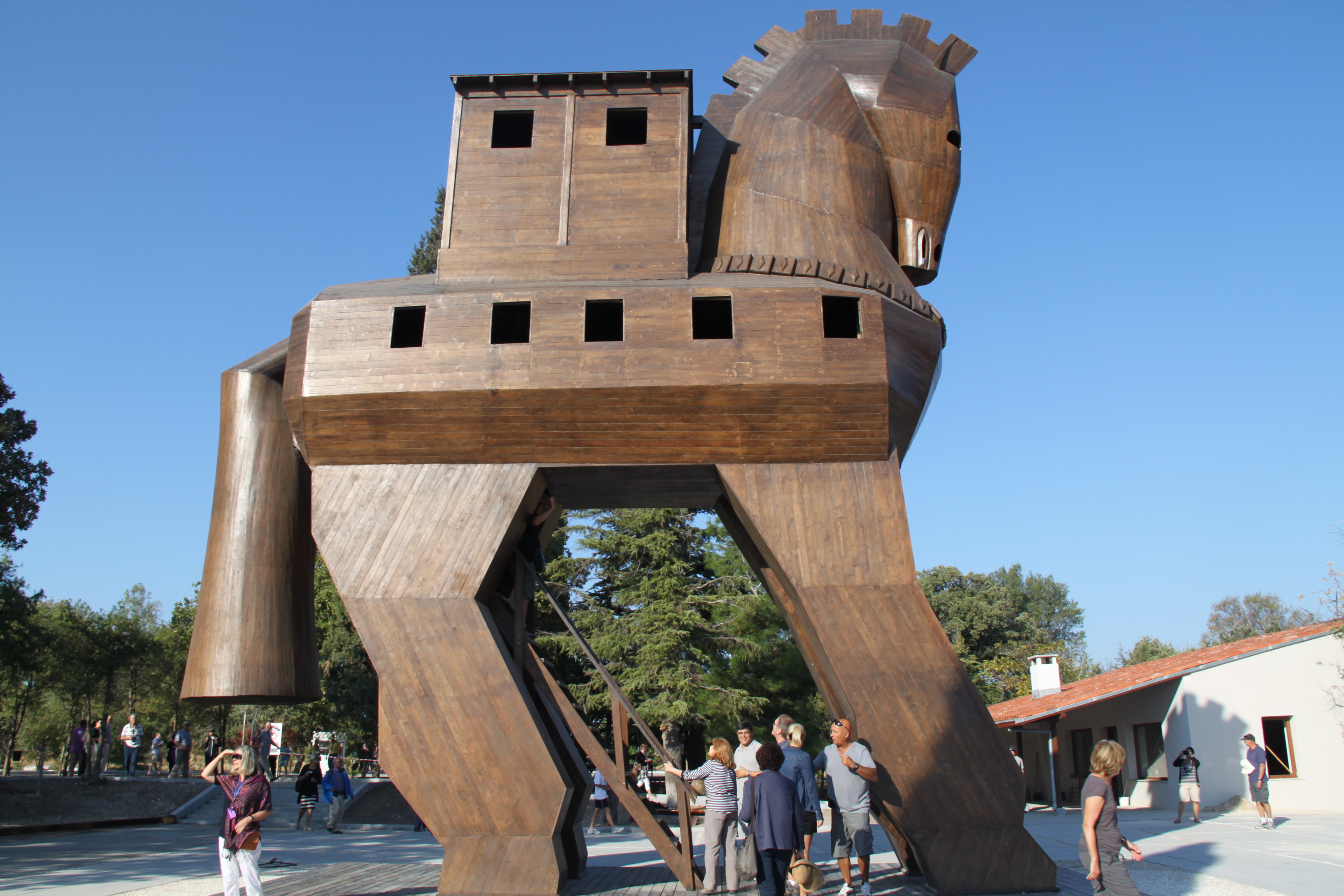
We’ve chosen the Trojan Horse from Canakkale, Turkey as our object for this week’s Daily Post Photo Challenge.
The horse here is only poking its head in, quite fitting as the Year of the Horse has only just begun.
**Happy Chinese New Year**

Share this:

buying a turkish rug: genuine or not?
Weaving a Turkish rug by hand is a skill that produces a work of art, and due to the increasing number in machine-woven products, this is becoming a fast dying art form. Owning a genuine Turkish rug is an investment as the market is now flooded with fake rugs. And finding a genuine Turkish rug is becoming a rarity.
Turkish rugs are renowned and so how can one tell
- if it has genuinely been woven by hand and NOT by machine?
- which is silk and which is mercerised cotton?
Here’s what we learnt from our few hours at a rug workshop in Turkey.
Background
To keep the trade alive, especially in the rural areas, the women are trained at the workshop for approximately 3 months. The first rug they complete is considered theirs to keep as a “reward” for their training. The second rug is assessed and, if the rug is approved, the woman officially becomes a rug weaver and can weave from home. All equipment is provided.
The weavers have patterns to use when weaving rugs. Each one is different and depending on the region/era that the rug is made, the colours and pattern can vary. With their religious faith, they believe only Allah (God) is perfect so no rug will be weaved as perfectly as the pattern. Each rug, in fact, will have a slight flaw or error, usually unnoticeable but not always.
To weave Turkish rugs, weavers use a 2-knot technique which essentially makes the rug stronger, tighter and easier to clean. Ultimately this results in durability as well. But this also means that it takes longer to weave. A Turkish rug can take anywhere from months to years to hand weave. When explained to us, we could understand how the amount of work and skill put into weaving a rug justifies the cost of a genuine Turkish rug. To ensure the women can maintain their trade, they are expected technically to have regular breaks (approximately every half an hour or so) throughout the day.


Hand or Machine?
A few tricks of the trade to help identify whether a rug is hand woven or not
- Hand woven rugs should be stored rolled up in shops. The quality should be questioned the moment rugs are kept flat and stacked on one another.
- Hand woven rugs when flipped over on the reverse side will have an almost identical pattern as its front.
- The tassles on the ends of the rugs are part of the rug and not “stitched” on. The rug should be woven in between the tassles.
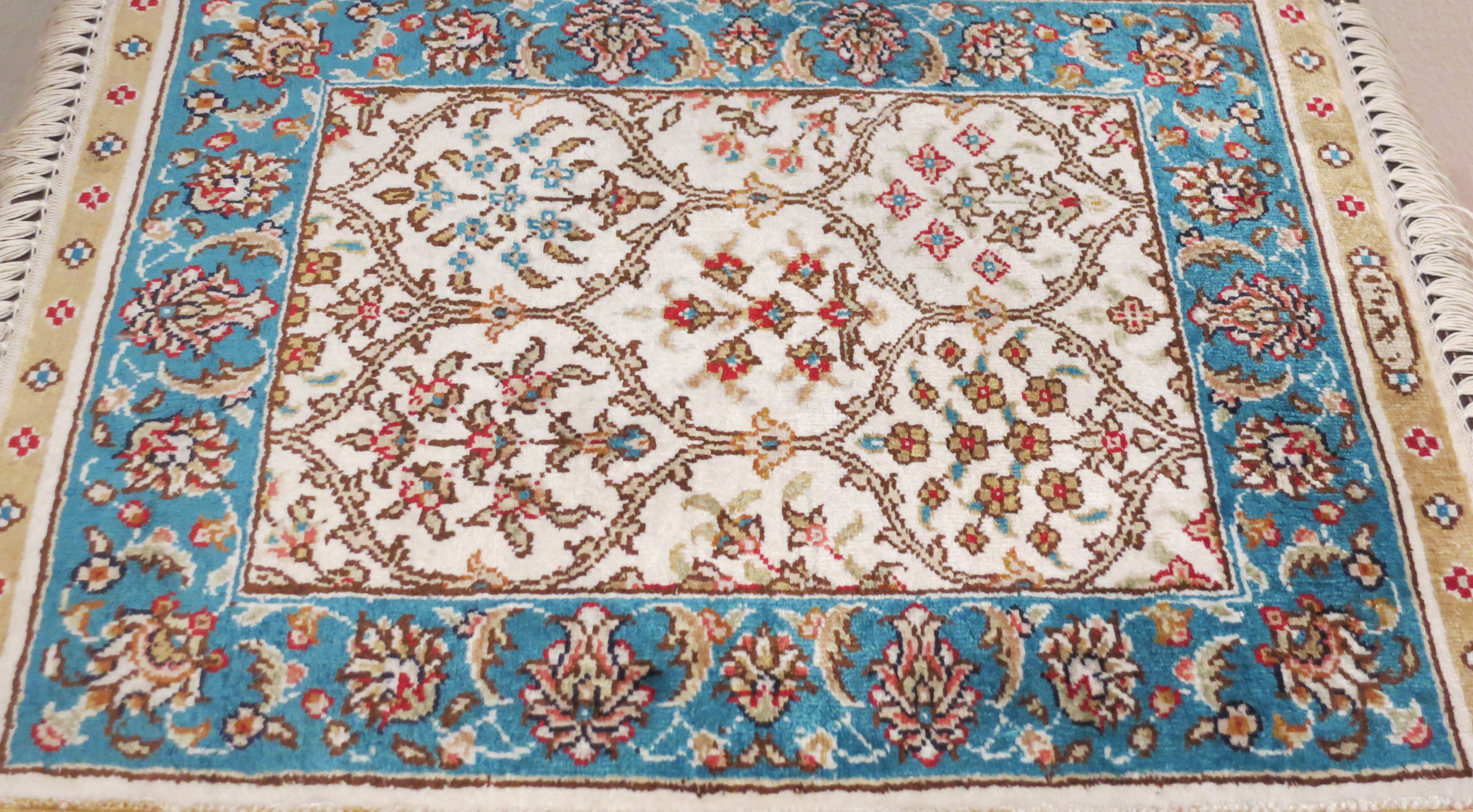


Is it really silk?
Mercerised cotton and silk have very similar appearances. But the difference between the two materials is silk can’t be set alight when brought close to a flame or won’t “fluff” when a coin is rubbed against it. Silk rugs can last hundreds of years and when you look at it from different angles, the colours on the rug will appear as different hues.
The process to obtain silk from silk worms is a process in itself. From one silk worm cocoon, a mile (1.6 km) of silk, on average, can be extracted. And when silk is woven, it was described as being as strong as steel. That certainly raised our eyebrows.
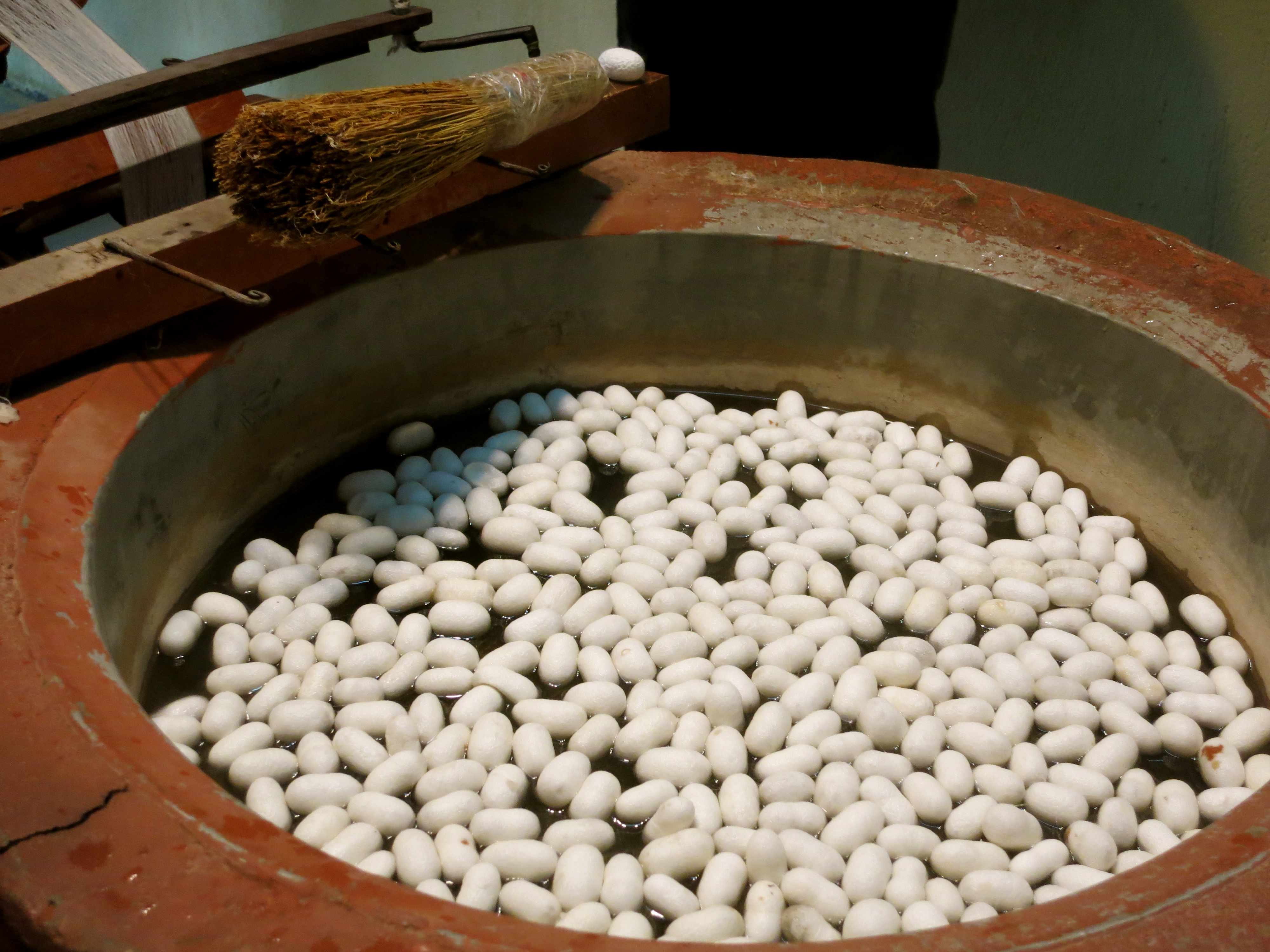
We visited the carpet weaving workshop, nearby to Saklikent Gorge, certified by the Turkish Government and the Carpet Weaving Association. Buying at these Turkish Government workshops, we were told, you will get an authenticity certificate posted to you within 6-8 weeks. Ours arrived within 2-3 weeks of us returning home. Depending on the size of the rug, it can be arranged to be shipped to you. Because ours was a small wall-hanging, we figured we would just carry it home with us. They packaged it really well.
Almost 3 months on, we still are yet to frame our “rug” and find a spot on the wall for it. At the moment, it is sitting underneath our World Map and acts as a reminder of a magic carpet that can take us anywhere 🙂

Share this:

7 ancient ruins of turkey (part 2)
Following up from yesterday’s “seven” ancient images of Turkey – we are now spending today’s post on talking a little bit about them.
We mean no disrespect to history or the ruins of Turkey but too much of a good thing can sometimes be bad. The first site of ruins that we saw was exciting, the second site was mind-boggling, the third site still brought awe but then by the fourth and those thereafter honestly became a bit of a blur.
But it wasn’t only here that we have experienced this form of saturation or sightseeing fatigue, this has happened to us in several parts of the world. In Europe, there were castles/palaces, cathedrals and churches! And our times in Asia, we have experienced temples saturation. We’ve suffered museum and art gallery fatigue too! Everything begins to blend into one. We tried slow travel and we’ve tried intense travel but it always happens! We have learnt that variety is key.
But back to Turkey, we did see amazing ruins! Please don’t get us wrong, there is no denying the significance of the things we saw. We love history, especially ancient history and we loved what we saw!
1) Troy
It is highly likely that this place needs no introduction. History buffs will know the city of Troy and those that don’t, may have at least seen the movie with Brad Pitt and Eric Bana. If you still have no idea what we are talking about, then maybe you know the legendary tale how Troy came to be conquered by the Greeks in the wooden horse!
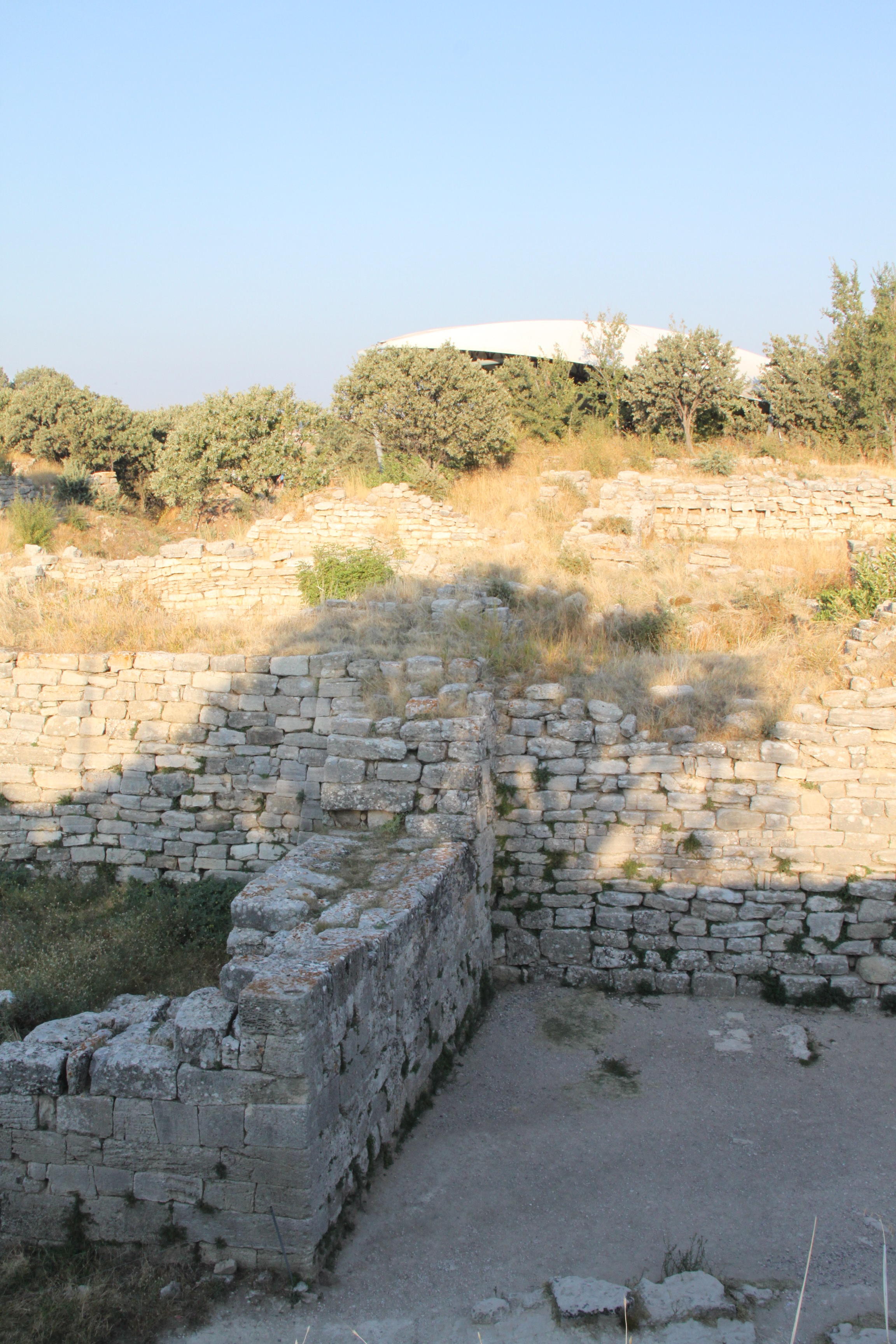
This site is probably underwhelming in some respects but we were still excited. As we walked through the clearly marked path, we tried to grasp the size of the walled city. It definitely isn’t big by today’s standards but we knew they were not penetrable. It blew us away how the city wall we could see was only part of it, the height was much taller and the rest was still buried beneath where we stood.
And of course, we needed to do the typical tourist thing, climb inside the horse and have our photos taken.
2) Pergamum
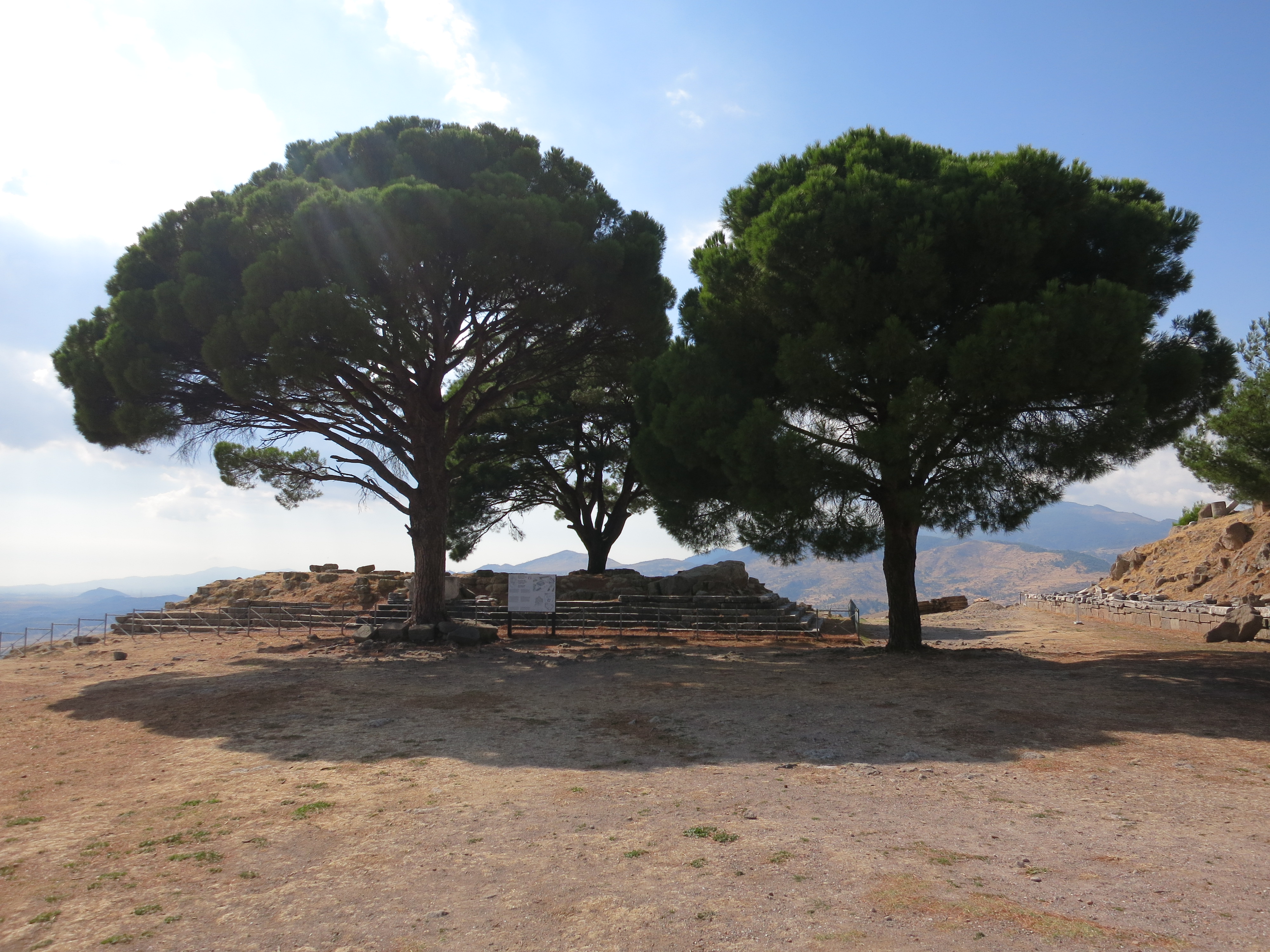
The most impressive Temple of Zeus altar was discovered here however unfortunately today there is nothing more than rubble. The altar have been excavated and taken back and reconstructed in a museum in Berlin – which is a shame but in terms of preservation, probably for its own good.
What we loved about this ancient ruins site, aside the fact you travel on a cable car up to it, is the gorgeous amphitheatre! Looking at our photos now still provides this overwhelming feeling of can’t-believe-we-saw-that. It’s so steep and its sheer size astounds us still. This place is definitely worth a visit. We really enjoyed it here.

3) Ephesus
Ephesus is probably most famous for the Library of Celsus and Gate of Augustus. Hate to break it to you, but is all reconstructed with replicas. The originals can be found in Vienna. Sometimes, we wish we didn’t know any better.
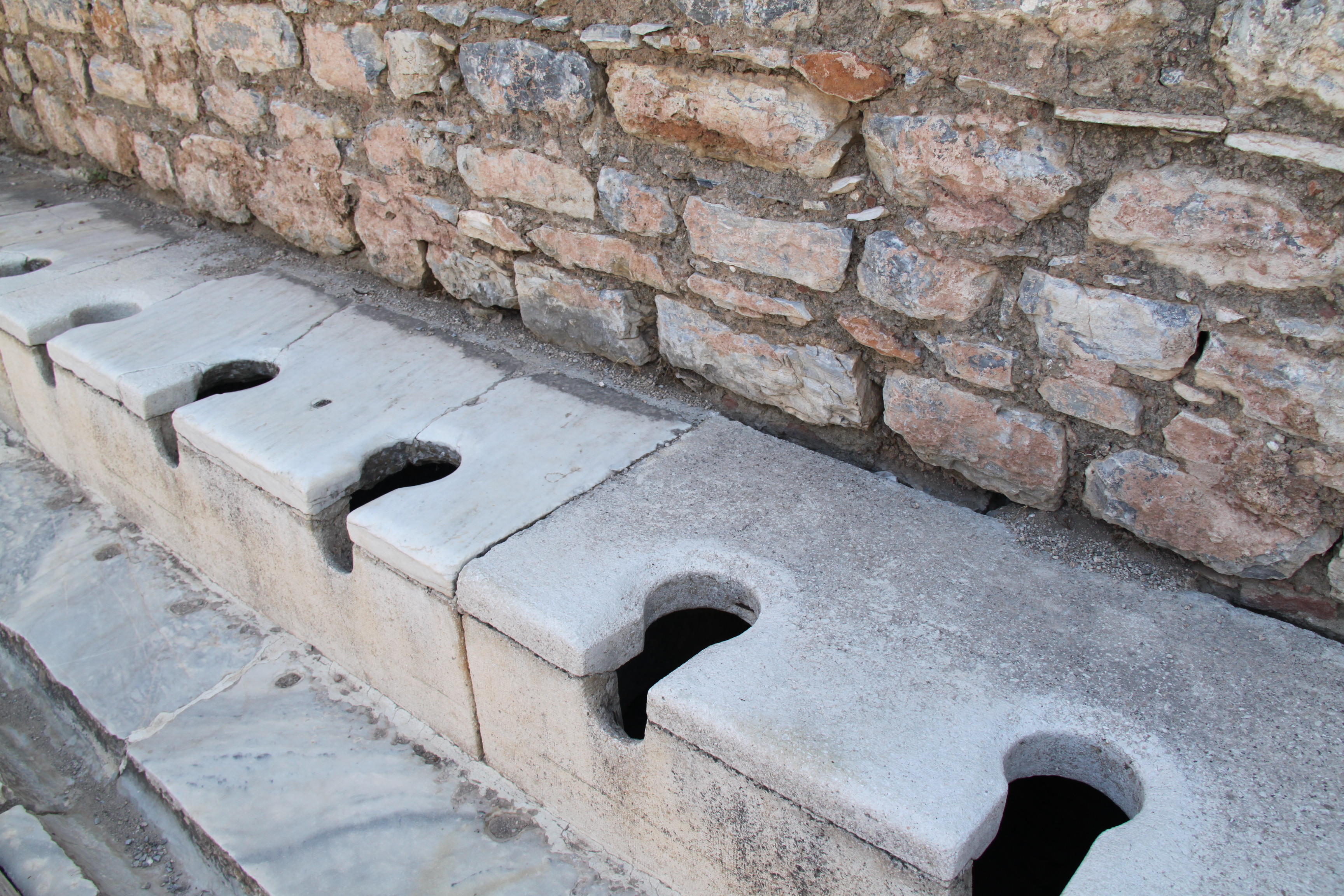
Anyway, it didn’t bother us much as we found some other things rather fascinating while here; the mosaics on the paths outside the terraces, the public washrooms, the Fountain of Trajan, the Goddess Nike carving and one of us being from a health background was quite humbled to see the medical and pharmacy symbols. Entering the gladiator arena was also probably a wee bit exciting!

Ephesus is not far from Kusadasi or Izmir which are ports for cruises. So if you happen to be here when the boats are in, expect to have thousands of other fellow visitors. Although what we saw here was magnificent and mind blowing, it was also extremely crowded.
4) Temple of Artemis
Possibly the most unexciting ancient ruins we have ever seen on any travels. The site where it once stood houses now nothing noticeable except some remains and one lone pillar. In its heyday, there is no doubt based on the reconstructions of its probable appearance that it was a very grand building. It was also once an ancient 7 wonder of the world. But alas, is no more and probably explainable due to it sad state. This might have been where out interest began to wane as is yours, so if you are reading…. thank you, we appreciate it 🙂
5) Aphrodisias
A bit of a mixed bag this place for us. There was the Sebasteion and the tetrapylon which were both reconstructed. So the stadium was our biggest highlight here. It is about 2 football fields long (260 m) and would have been able to house up to 30, 000 spectators. It is said that it is one of the best preserved ancient stadiums. There is an air-conditioned museum which houses all the statues and artefacts found at the site. It is a lovely refuge on a hot day but also very interesting to explore the different exhibits!


6) Perge
Seeing the old baths was probably the most fascinating thing here. Firstly there was a water pipe system and that there were visible heating facilities (hypocaust chambers) underground. Perge also has a stadium outside of the entrance gates which is believed could house 12, 000 spectators.


7) Aspendos
It is noticeable from our photos that our interest here has waned a lot. The heat was probably also getting to us. We don’t have very many photos of this particular area. We have a few of the very well-preserved theatre and a few of the aqueducts. What actually fascinated us most about this area were the cotton fields. Being born and raised in the city, we had never seen how cotton was grown other than on TV and in books. So to see it in “real life” was our highlight here!

Despite possibly feeling a little weary of ruins, there is one thing we always do when we visit historical sites. We pause and try to imagine what life would have been like in the times when the ruins were not ruins. In our heads, we try to recreate the sounds we might be hearing, the atmosphere. We will never know if we get it right but it’s still our way of soaking it all in so we remember it the way we choose to remember it.

 wise monkeys abroad